By FRANK REMKIEWICZ
Columnist
Picture two people walking down a quiet, treelined path. Each person comes from the opposite direction. These two meet at a spot where a nice bench just happens to be. They greet each other and begin to talk. As they talk, each pulls a quarter out of their respective pocket. They decide to exchange quarters and be on their way.
Now, picture two people walking down a quiet, treelined path. Each person comes from the opposite direction. These two meet at a spot where a nice bench just happens to be. They greet each other and begin to talk. As they talk, they discuss some Christian principles. One talks of love, and the other talks of faith.
The difference in each scenario, I hope, is quite clear. In the first example, each exchanges a quarter. As they leave, they go on their way; neither is richer. They each still have only a quarter. In the second meeting, each shares an idea. When each goes about their business, they are richer because they walk away with a new idea. See, each person brought an idea to the conversation, and so when they left, they each had their own idea, but also had the new idea the other person shared.
Why are we so afraid of sharing our ideas about Christianity? Christ, at about the age of twelve or thirteen, was found by His parents sharing Christian ideas and principles with the temple elders.
We all remember the Beatitudes, but here is what follows. Matthew, chapter five starting at verse 43 says: 43 “You have heard that it was said, ‘You shall love your neighbor and hate your enemy.’ 44 But I say to you: Love your enemies and pray for those who persecute you, 45 so that you may be children of your Father in heaven, for he makes his sun rise on the evil and on the good and sends rain on the righteous and on the unrighteous. 46 For if you love those who love you, what reward do you have? Do not even the tax collectors do the same? 47 And if you greet only your brothers and sisters, what more are you doing than others? Do not even the Gentiles do the same? 48 Be perfect, therefore, as your heavenly Father is perfect.”
This quotation is jam-packed with new ideas.
Jewish tradition at this time believed that if something bad happened to a family, it was God punishing that family. Christ rejects that principle, stating that the rain falls on the just and the unjust alike. Christ rejects the principle of “an eye for an eye”. Jesus changes everything: “Love your enemies and pray for those who persecute you.”
Look through the New Testament, and I think you will find that it reinterprets the Old Testament almost completely. My point is that Christ not only gave us Christianity, but did so publicly, without regard for who was hearing His message. Oftentimes, those who heard His message were the very people who needed to hear it. Jesus spoke the truth and without fear of reprisal.
If we are Christians, as so many of us in these United States claim to be, why are we afraid to speak the truth? Why do we reject the principles publicly of “all means all”? Instead, we pick and choose who is to be saved. People of color, people of varying genders, people with Christian integrity. Do I really need to quote John 13? Do I need to remind us all of the Good Samaritan or the woman at the well?
I also reject the idea that these new ideas take time. The idea that we can make incremental changes over time. We, Christians, do not have the luxury of time. Our Father does not give us the time. In fact, it is quite the opposite: “You know not the time when the father will call us home”. These days, when no one wants to hear anything other than their own ideas regurgitated back, we fear that if we speak the truth, everyone will hate us, throw stones, and ostracize us for it. We must take the lead as Christ taught us. We have no choice but to speak truth, where necessary, and demand change. Look where it got Jesus. Sure, He suffered and died on the cross for all the revolutionary changes He spoke of. But it brought us the greatest gift of all, salvation. Restoration of the relationship between our Father and us. How can we do anything less?
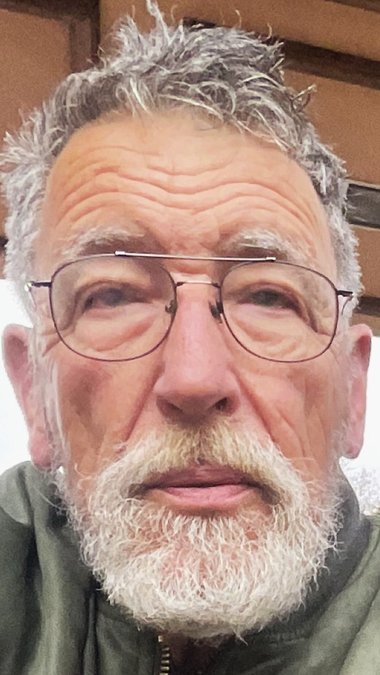
Frank Remkiewicz is an area resident and contributes a monthly column focused primarily on faith and religion. He can be reached at fremkiewicz@gmail.com. Opinions expressed are those of the author.