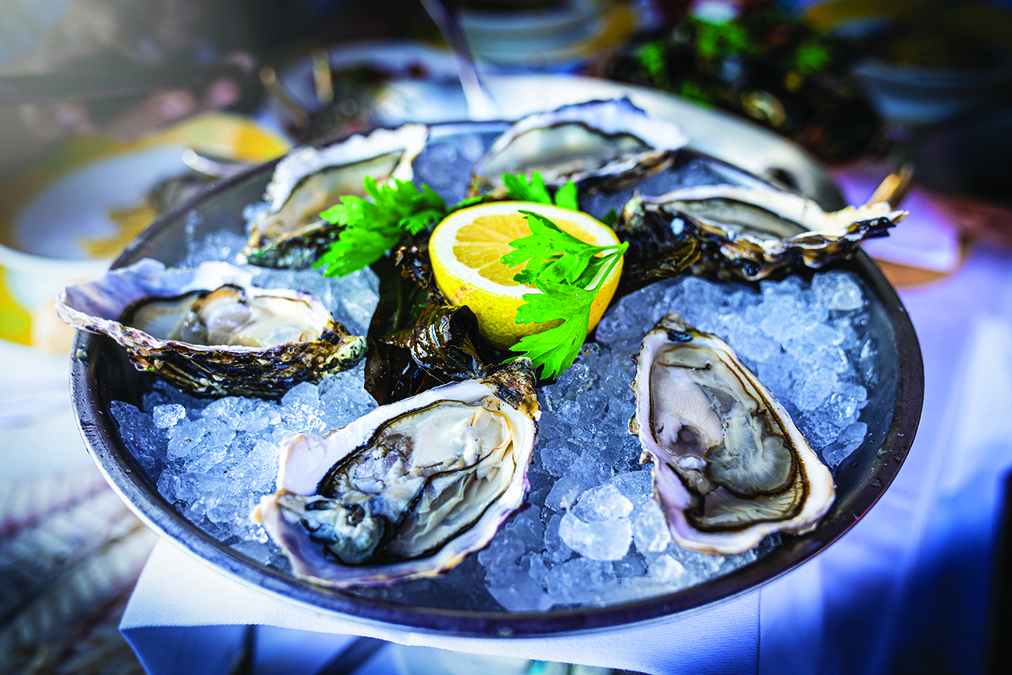
Eating oysters can be a unique culinary experience. Generally speaking, oysters are served raw on the halfshell. Oysters can take on the specific flavor characteristics of the water they grow in, something known as “merroir,” which is derived from “mer,” the French word for “sea.” Currents, runoff from land and other elements all affect the flavor of the shellfish, says Merroir.me, an informative forum for home cooks.
There is a certain etiquette and even some safety rules when enjoying oysters. Here are some tips to follow.
Keep oysters cold. When purchasing oysters, it is important to keep them cold. If they were purchased from a seafood store, bring a cooler along so they can remain cool in transit. Then spread the oysters out in a single layer between two layers of damp kitchen towels. Oysters will not thrive on top of ice because they are saltwater creatures, says Serious Eats. Ice is reserved only for when they already are shucked.
Know your taste. Oysters from the Atlantic have a sharp brine. Oysters from the Pacific are sweeter and more kelpy. Oyster species also will affect taste, says In a Half Shell. People tend to prefer one type of oyster over another.
Scrub the oysters. Before shucking, it is essential to scrub the oysters down to remove any dirt, mud, shell fragments, and sand. Work quickly to minimize how much time the oysters are out of the refrigerator.
Tap the oysters. Raw oysters are served alive. If an oyster is open on a platter and does not close when tapped, it should be discarded, as it is dead and not safe to eat.
Recognize oysters are safe year-round. It was once believed that oysters were only safe when harvested in September to April to avoid warmer water bacteria. But thanks to modern refrigeration, high-quality oysters are now available and safe year-round.
Know the health risks. Some raw oysters can carry the vibrio bacteria, which can cause severe illness, says the Washington State Department of Health. Anyone with a compromised immune system, liver disease or diabetes should avoid raw shellfish.
Practice shucking. Shucking oysters requires practice. Opening the oyster requires leverage and the hinge of the oyster.
Slurp and chew. Experts recommend bringing the shell to the lips, tipping it back and then slurping the meat and the natural oyster juices. Chew the oyster once or twice to release the full flavor profile before swallowing, says Woodmans of Essex.