Samuel Clemens — aka Mark Twain — would have loved the irony.
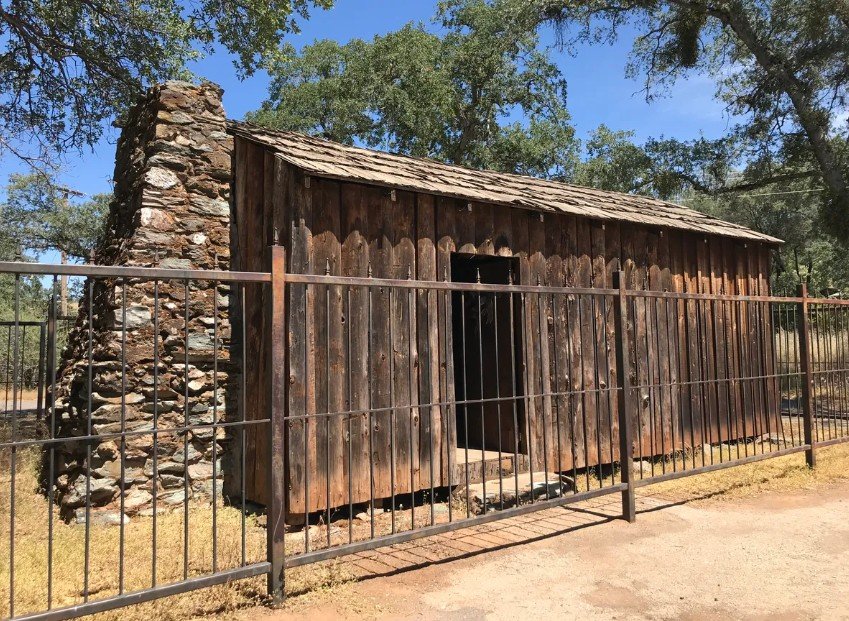
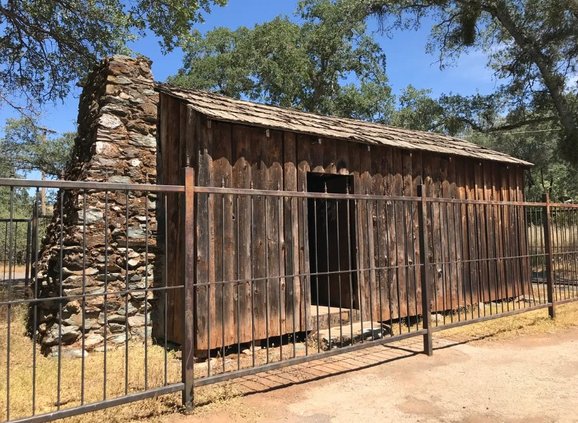
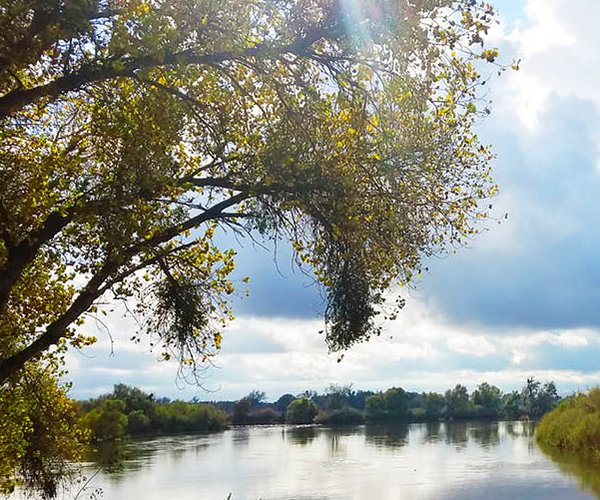
The restored cabin where the popular and controversial 19th century author lived atop Jackass Hill from Dec. 4, 1864 to Feb. 25, 1865 is just above the Stanislaus River.
He had yet to write the “whiskey is for drinking; water is for fighting over” that many credit him for penning.
There is a debate whether he was the first to pen such words.
But his widespread popularity, fame, and following he enjoyed in the late 19th century that would be the envy of even today’s most successful social media influencer assured long after his death “the whiskey for drinking” phrase would be part of the celebrated wit of Mark Twain.
The irony is Jackass Hill is a mile south of where a bridge today crosses New Melones Reservoir created by damming the Stanislaus River.
The decades long fight that preceded the construction of Melones from 1966 to 1978 — the last major dam built in California — continues to be a player in California’s ongoing water wars that broke out months after the first gold nugget was discovered at Sutter’s Mill on the American River.
It was during Clemens’ time in the 209 that he struck it rich.
But it wasn’t from gold. It was from writing.
Prior to arriving in Jackass Hill in Tuolume County he spent two years in Nevada’s Virginia City.
It was there that he worked as an editor and reporter for the Territorial Express after he became penniless as the result of his attempts to prospect the Comstock Lode looking for the proverbial big pay day.
His tenure at the Territorial Express is when he started writing under the pen name Mark Twain. It was inspired from his days as a licensed steamboat pilot on the Mississippi River.
Steamboat crews used the term “mark twain” — twain being an archaic English word meaning two or a pair — to signify a depth of two fathoms or 12 feet. This depth indicated safe water for navigation.
When he was at the Territorial Express, he covered everything from the Nevada legislature in Carson City to reporting the number of hay wagons that rolled into town each week up Geiger Grade from the Washoe Valley.
Clemens fled Virginia City on May 29, 1864, for San Francisco, fleeing to avoid arrest for challenging a rival editor to a duel.
Clemens ran into more trouble in San Francisco.
After his friend Steve Gillis was jailed following a bar brawl, Clemens posted a $500 bond he could not afford, forcing him to flee to the cabin of Jim and Bill Gillis on Jackass Hill, near Angels Camp.
He stayed with brothers Jim and Bill Gillis as well as Dick Stoker. The three were pocket miners that built the cabin.
Clemens joined them in mining.
Jackass Hill was so named as it was a popular resting point for miners moving equipment and such via jackasses between towns and mines. There were sometimes as many as 200 jackasses overnight atop the hill.
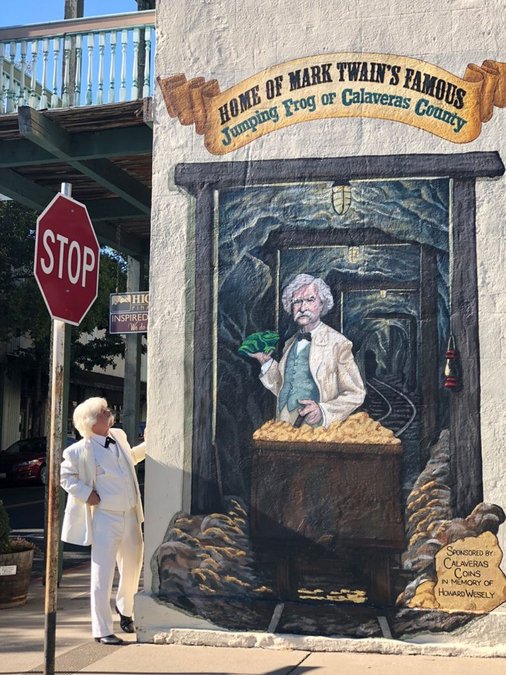
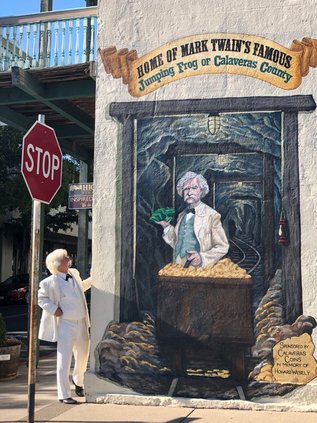
While staying at the cabin, Clemens heard the story of the jumping frog contest in an Angels Camp saloon.
The short story that he wrote thereafter — “The Celebrated Jumping Frog of Calaveras County” — would literally transform his life.
It was originally published as “Jim Smiley and His Jumping Frog.” It represented his first major success as a writer and brought him national acclaim.
“The Celebrated Jumping Frog of Calaveras County & Other Sketches” was the title of his first book published in 1867. It included a collection of 27 stories that had been published previously from his dispatches to newspapers — the San Francisco Call, Sacramento Union, and the Buffalo Express among others — as well as magazines.
His success allowed Clemens to live in an expansive three-story Gothic-style house he built in 1874 in Hartford, Connecticut, with his growing earnings from his writing.
The house he lived in until 1891 today is a national historic landmark and houses the Mark Twain Museum.
It is in that house that he wrote classics such as “The Adventures of Tom Sawyer” and “Adventures of Huckleberry Finn.”
His stay at Jackass Hill is where some of the tales his cabinmates spun would be included in Twain’s future works.
Stoker was Dick Barker in “Roughing It.”
One look at the cabin and “roughing it” comes to mind.
The cabin was restored in 2002 by the Sonora Kiwanis Club.
The cabin is on the Bret Harte Trail.
There was indeed gold nearby as at one location miners took some $10,000 worth of coarse gold from roughly 100 square feet of land.
The turnoff to the dead-end Jackass Hill Road is about a mile south of the Highway 49 bridge over New Melones Reservoir and the Stanislaus River heading north out of Sonora.
It is safe to say most people would be highly disappointed given the primitive cabin protected by wrought iron fencing and a historic marker is all there is to look at.
It is about the size of 1½ Chevy Suburbans and not much higher than the roofline of a full-sized SUV.
But if you’re a Mark Twain junkie (guilty as charged) or a history buff, it is well worth the day trip combined with a visit to nearby Jamestown or lunch in Sonora that even has an El Jardin for the fans of the Mexican restaurants you can find in Manteca, Turlock, Oakdale, and Santa Cruz.
Given the fact I’ve taken in the old Virginia City Territorial Express office as well as went out of my way when I was in St. Louis 38 years ago to drive at night on the spur of the moment through a severe lightning storm to stay in Hannibal, Missouri, the fact I waited so long to see a spot where Mark Twain labored in the 209 is a bit perplexing.
That said, my trip there in 2018 it was a lot cheaper than my 1988 trip to Hannibal where — just across the street from Twain’s childhood home — I managed to dump what was then (and still is today) an outlandish sum of $290 in Becky’s Bookshop buying various books by Mark Twain.
They were primarily works and his letters that are slightly more obscure today than his books such as “Tom Sawyer”, “Huckleberry Finn”, “A Tramp Abroad”, “Life on the Mississippi”, “The Prince and the Pauper” and “A Connecticut Yankee in King Arthur’s Court”.
And while the cabin where Twain once stood is definitely not going to get your heart racing if you are not a hardcore Samuel Clemens fan, it can be a good excuse to take a jaunt to the foothills.
Now the excuse for
writing about Clemens
The upcoming Calaveras County Fair and Jumping Frog Jubilee taking place May 14-17 is the excuse for writing about Clemens.
The four-day affair offers all the usual trappings of a county fair from carnival rides, parade, exhibits, and food to entertainment.
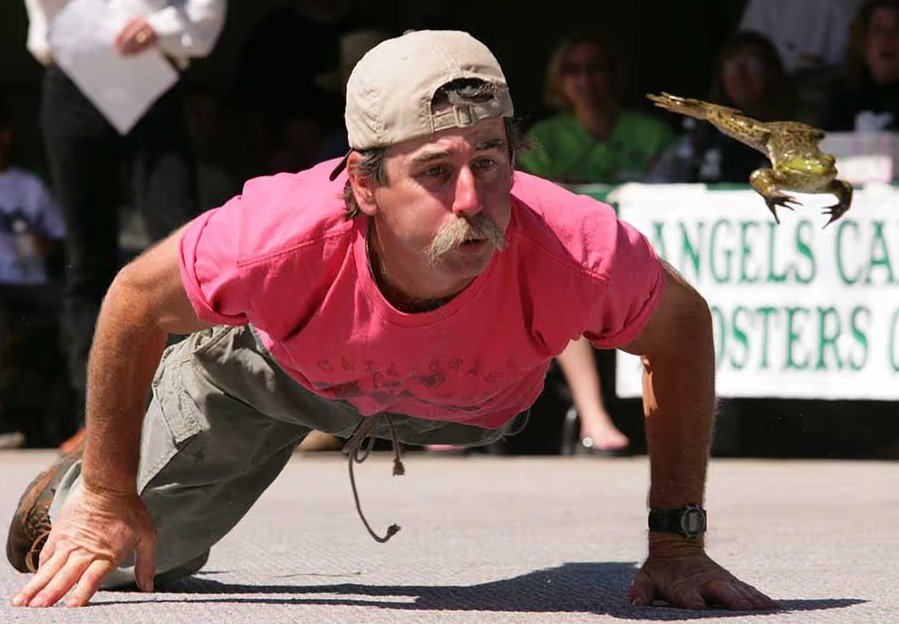
But the main event — and arguably the best entertainment — is the jumping frog contest that was started in 1928 inspired by Clemens’ break-through short story.
You can even be a frog jockey if you wish.
Bring your own frog from a nearby pond or stream or rent one for $5 at the fair.
Frogs, by the way, are pampered in the on-site Frog Spa, a temperature-controlled area where they’re cared for and fed their favorite froggy treats.
Once the competition ends, the frogs are safely returned to their natural habitat.
Break the long-standing world record set by Lee Guidici and his frog Rosie the Ribiter at 21 feet, 5¾ inches, and you’ll claim the global title, earn international recognition, and score an impressive $20,000 cash prize along with your place in frog-jumping legend.
For information about the fair and frog jumping contest, go to www.frogtown.org.
To contact Dennis Wyatt, email dwyatt@mantecabulletin.com