The United States celebrated its 250th anniversary in 2026, prompting widespread celebrations and an increased focus on the events that shaped the nation.
The American Civil War was a formative event for the United States. The four-year conflict was fought between the Union forces of the northern United States and the Confederacy, which was a collective of southern states that seceded from the nation. According to Britannica, 11 southern states seceded from the United States to form the Confederate States of America to protect and expand the system of chattel slavery. The war began on April 12, 1861, when Confederate forces attacked Fort Sumter in South Carolina.
By November 1863, the small Pennsylvania town of Gettysburg was trying to recover from the bloodiest battle of the war. Four months earlier, Union and Confederate forces had clashed, leaving more than 50,000 combatants dead, wounded or missing. Thousands of Union soldiers were buried in shallow, hasty graves across the landscape, prompting local attorney David Wills to propose organizing a proper burial ground, called the Soldiers National Cemetery, according to the Gettysburg Experience.
The dedication of the cemetery took place on November 19, 1863, and event organizers tapped Edward Everett, a celebrated orator and renowned scholar, to offer the keynote address. President Abraham Lincoln, the anti-slavery Republican leading the nation, received a late invitation, and was requested to deliver only a few short closing remarks to formally dedicate the grounds.
Everett produced a two-hour classical narrative speech, drawing comparisons of the battle to ancient Greece in front of a crowd of roughly 15,000 people. Lincoln took the podium afterward, and spoke for just under three minutes. Despite the relative brevity of his remarks, Lincoln’s speech has exhibited more staying power than Everett’s.
Contrary to popular belief, Lincoln did not hastily scribble his remarks on the back of an envelope on the train ride to Gettysburg. Instead, he carefully drafted and refined the text in Washington and at the Gettysburg home of David Wills before the event.
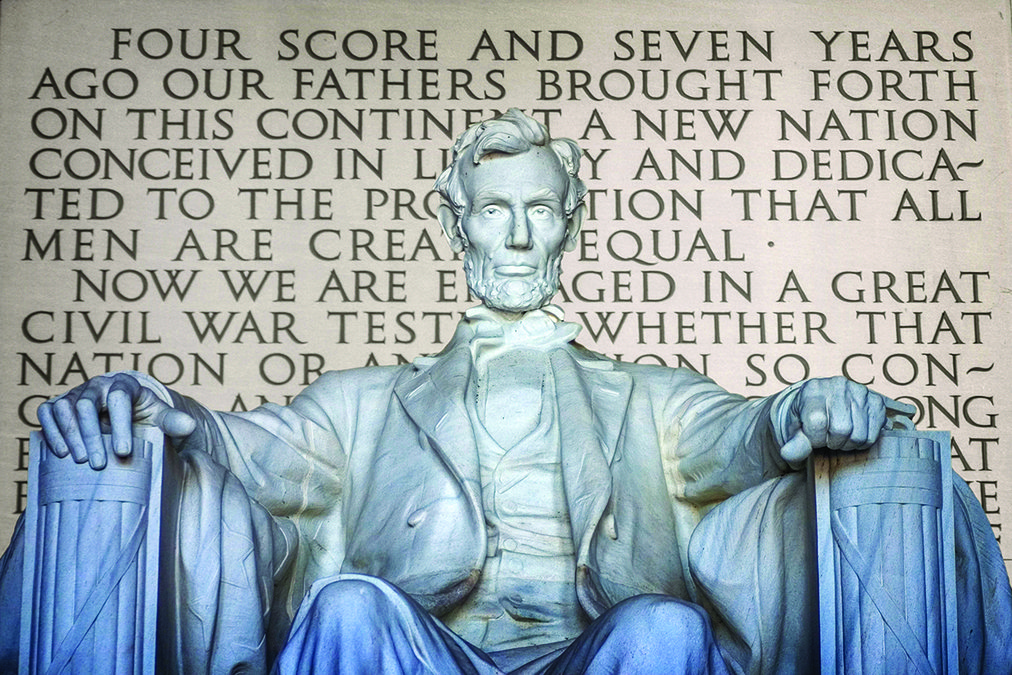
Lincoln’s concise speech redefined the core values of the American democracy and became one of the most iconic speeches in world history. Beginning with Four score and seven years ago, which was a nod to the Founding Fathers, and calling on the nation to recognize that the men, living and dead, who struggled in Gettysburg consecrated the land so that the nation might live. He prompted the audience to remember the unfinished work remaining before them.
Some people dismissed Lincoln’s brief address, but Everett immediately recognized its brilliance and impact. According to the Massachusetts Historical Society, the day after the address, Everett wrote to Lincoln saying, I should be glad, if I could flatter myself, that I came as near to the central idea of the occasion, in two hours, as you did in two minutes.
The Gettysburg Address is now widely considered Lincoln’s most notable speech. And its concluding promise that government of the people, by the people, for the people, shall not perish from the earth, would become its most famous sentiment.