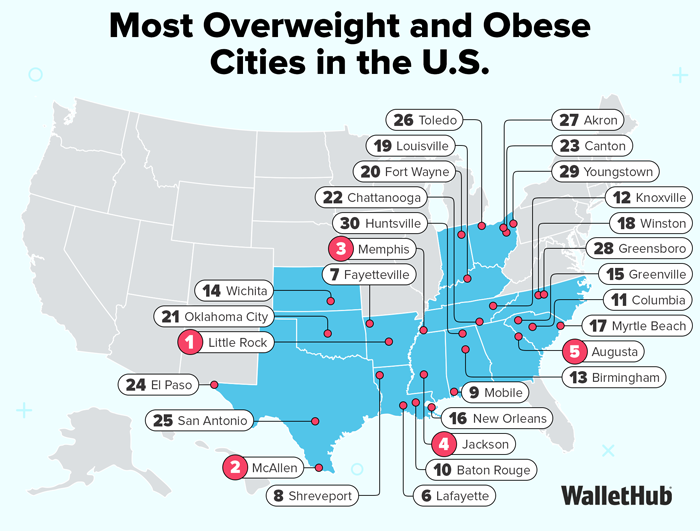
With March being National Nutrition Month and the annual medical cost of obesity reaching close to $200 billion, the personal-finance company WalletHub has released its report on 2026’s Most Overweight and Obese Cities in the U.S., as well as expert commentary. The report highlights the places where residents are in the most danger of weight-related health conditions, and thus need to improve their exercise and diet.
In order to call attention to the communities where weight-related problems are most prevalent, WalletHub compared 100 of the most populated U.S. metro areas across 19 key metrics. The data set ranges from the share of physically inactive adults to projected obesity rates by 2050 to healthy-food access; four cities in Louisiana were in the top 20.
Most Overweight & Obese Cities
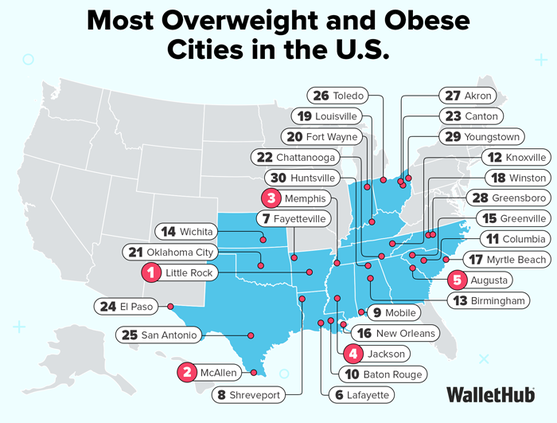
Little Rock, Arkansas is the number one city on the list, followed by McAllen, TX; Memphis, TN; Jackson, MS; Augusta, GA; Lafayette, LA; Fayetteville, AR; Shreveport, LA; Mobile, AL; and Baton Rouge, Louisiana rounding out the top 10.
Ranked from number 11 to number 20 were Columbia, South Carolina at number 11, followed by Knoxville, TN; Birmingham, AL; Wichita, KS; Greenville, SC; New Orleans, LA; Myrtle Beach, SC; Winston, NC; Louisville, KY; and, at number 20, Fort Wayne, Indiana.
California’s first entry on the list is Riverside, coming in at number 38, with Los Angeles next on the list at 76 and San Diego at 84. Sacramento ranked 90th, San Francisco was rated at number 94 and San Jose was at number 96.
Key Stats
The McAllen, Texas, metro area has the highest share of obese adults, which is 2.4 times higher than in Asheville, North Carolina, the metro area with the lowest.
The McAllen, Texas, metro area has the highest share of physically inactive adults, which is 2.8 times higher than in Provo, Utah, the metro area with the lowest.
The Memphis, Tennessee, metro area has the highest share of diabetic adults, which is 2.4 times higher than in Bridgeport, Connecticut, the metro area with the lowest.
The Baton Rouge, Louisiana, metro area has the highest share of adults with high blood pressure, which is 1.9 times higher than in San Jose, California, the metro area with the lowest.
“Obesity is becoming more and more prevalent in the U.S., and it’s costing us big time. In the most overweight and obese cities, residents often lack easy access to healthy food and recreation opportunities, so investing in those areas should help improve people’s diets and exercise regimens, and reduce the financial burden overall,” said Chip Lupo, WalletHub Analyst. “Little Rock, Arkansas, ranks as the most overweight metro area in the country, with nearly 23 percent of children ages 10 to 17 being obese and an additional 18 percent being overweight but not obese. Little Rock residents are also very affected by weight-related diseases, with the fourth-highest percentage of adults with high blood pressure and the fifth-highest heart-disease rate. A major contributing factor to Little Rock’s obesity is that it has the lowest numbers of health educators per capita and limited access to healthy foods.”
To read the full report, visit:
https://wallethub.com/edu/fattest-cities-in-america/10532
Expert Commentary
By Andrew Burnstine, Ph.D.
Associate Professor,
Lynn University
What are some tips for eating healthy without breaking the bank?
Eating nutritiously without overspending is all about strategic choices. According to the NIH, choosing plant-based proteins like dried beans and lentils is one of the most effective ways to save, as they cost significantly less than meat while being packed with fiber. The NIH also suggests buying generic or store brands, which can be 20 percent to 30 percent cheaper than brand names for the same quality. Another tip is to buy frozen fruits and vegetables, which are just as healthy as fresh ones but last much longer and reduce food waste. One study noted that the average American throws away more than 240 pounds of food a year, so buying frozen food can save you a lot of money over time.
What are the biggest mistakes people make when trying to achieve and maintain a healthy lifestyle?
A major mistake people make is trying to change everything at once. The NIH notes that sustainable weight loss usually involves small changes, such as losing one to two pounds a week rather than extreme dieting. Another huge error is consuming too many calories. According to NIH data, sugar-sweetened beverages are a leading source of added sugars and can quickly lead to weight gain without making you feel full. Many people also fail to plan their meals. The NIH points out that planning helps you avoid impulse buys at the grocery store, which are often the most expensive and least healthy items.
What are some measures that individuals can take to prevent severe health complications caused by obesity?
The NIH emphasizes that regular physical activity is one of the best ways to prevent complications like heart disease and type 2 diabetes. Aiming for 150 minutes of moderate activity each week can make a massive difference in your health. Another key measure is monitoring your waist size. The NIH states that a waist measurement of over 40 inches for men or 35 inches for women increases the risk of obesity related diseases. Eating more fiber and whole grains also helps manage blood sugar and cholesterol levels, which protects your heart and kidneys from long-term damage.