The Northern San Joaquin Valley and adjoining Sierra counties — 209 territory if you will — is a destination every year for arguably more than 8 million people from elsewhere in California as well as the rest of the nation and foreign lands.
Yosemite is the big draw with upwards of 5 million a year.
But there are also countless other attractions such as the Delta, quaint Gold Rush era towns, trendy wineries, unique “art” enclaves whether that is performing or otherwise, one-of-a-kind dining experiences, as well as enough natural wonders to warrant 209’s own cable channel.
With the dawn of a new year, it would do wonders for your soul and taste buds to take a close look at what is in your own backyard in the 209.
Here are 12 suggestions — a different one for each month of 2026 — for you to consider putting on your must-do list for the year.
There’s Gold Rush history and sun in them thar hills
January, as anyone who has lived in the Central Valley for more than a few years can attest, can turn into a dreary place with endless days of fog chilling the bone and hiding the sun for weeks at a time.
The modern record was 21 consecutive days back in January of 1990 where the sun didn’t make an appearance. In Seattle at least they have rain.
Don’t get me wrong. The valley draped in fog is a magical place. But even with the most enticing magical shows you still need an intermission.
Driving 45 miles or so to the east via Highway 120, Highway 140, or Highway 6 gets you out of the fog and into the Gold Country or Sierra foothills. It can be refrigerator weather at a nice chilly and steady 58 degrees 24/7 in the valley and be brisk and sunny with a day time high pushing the 70-degree mark in places like Sonora, Jackson, Mariposa, and Sutter Creek.
A crisp and sunny winter day in places like Jamestown, Volcano, or Columbia is worth the trip in itself.
But the nice thing about the Gold Country even with the invasion of Walmart and McDonald’s, there is enough non-209 tourism drawn by the lure of the Gold Rush folklore and places like Yosemite — not to mention wineries such as Ironstone that are approaching world-class reputation — to sustain what seems like an endless host of unique stores, dining experiences, and even art galleries and live theater in buildings and business districts dating back to the mid-19th century.
Get a taste of the Great Gatsby era by driving into the Delta
February is a time when nature starts waking from its slumber led by almonds setting pink and white buds. It is also the month of romance. What better time to venture back into time and enjoy a lifestyle that the Great Gatsby would have approved.
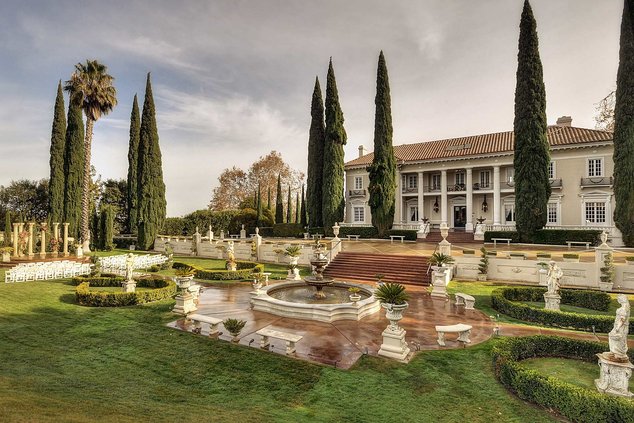
Granted, your destination — the Grand Island Mansion — is actually not within the 209, but the trip there and back will give you a full helping of the portion of the 1,000 miles of meandering waterways that can be found in San Joaquin County.
The unique and historic 58-room Italian Renaissance villa along a Delta levee in Walnut Grove is part of the largest private estate in Northern California.
The four-story, 24,000-square-foot villa was built by European craftsmen in 1917 for Louis Meyers and his wife Audrey, daughter of Lubin of the Weinstocks Lubin department stores.
The mansion has been the subject of photo spreads and stories in National Geographic, Sunset Magazine, Architectural Digest, Playboy magazine, Victoria’s Secret catalog, and Macy’s Furniture catalog.
It is now primarily a wedding setting — with incredible and elegant overnight accommodations in suites on the third and fourth floors —although the mansion and grounds are open for public viewing and dining during the Sunday Champagne Brunch served from 10:30 a.m. to 2 p.m. with reservations required. Upcoming brunch dates are Jan. 18 and 25; Feb. 1, 8 and 15; March 1, 8, 15, 22 and 29; and April 26.
There is a special brunch scheduled for Easter Sunday on April 5.
Sunday brunches are $79.95 per person while specialty brunches are $99.95 per person. Reservations are a must.
The power of water through the ages comes crashing down
March, particularly near the end of the month, is the absolute sweet spot on the calendar when it comes to visiting arguably one of the most visited and stunning valleys in the world — Yosemite Valley.
The waterfalls are gaining strength thanks to the melting snow yet the valley doesn’t have the notorious crowds it is infamous for.
You can savor a day complete with a picnic lunch on the valley floor or you can take one of the hikes out of the valley toward the rim without worrying about heat exhaustion.
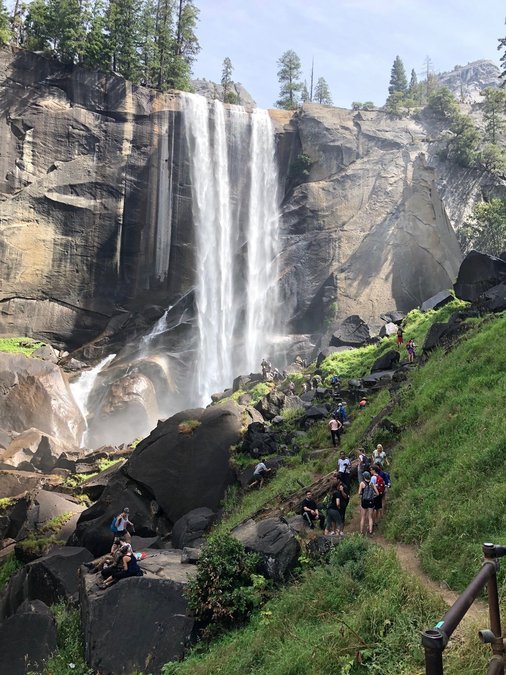
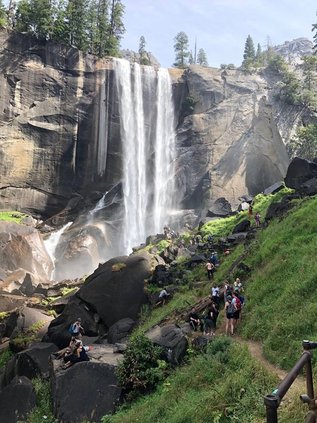
It is one of the best times to hit Yosemite’s most popular hike — the Mist Trail — that leads to Vernal Falls and Nevada Falls beyond.
You will need to pack rain gear even if it is sunny with a high of 70 degrees as you will get soaked from the spray of Vernal Falls as you hike along the trail.
Rainbows are a common occurrence. Take my word for it. You can literally fall in love if you take the hike.
The hills are alive with flowers
April brings flowers to the lower elevations in the Sierra. The best spot courtesy of nature while driving is along Highway 140 heading toward Mariposa. The sides of the road are carpeted with wildflowers including explosive bunches of my favorite — the California Golden Poppy.
Along Highway 140 heading north out of Mariposa about 20 miles toward Yosemite National Park is where you will find “the” flower hike in the 209.
The trail head sign is at Savage’s Trading Post. The hike starts on private property but almost all of it is in the Sierra National Forest. The trail is marked, fairly flat, and narrow. It is the premiere spring flower hike in the 209.
Dine overlooking the infamous Priest Grade
May is the perfect time for Sunday — or Saturday — drives to the foothills for a day of browsing shops and enjoying the scenery capped with a great meal.
Old Priest Grade Station where Old Priest Grade Road meets Highway 120 on your way to Groveland has hearty breakfasts and lunches.
But more importantly their deck dining has incredible views looking toward Don Pedro Reservoir.
Old Priest Grade — originally a trail walked by Native Americans — is considered by some to be one of the most dangerous roads in North America.
The grade has sustained steepness approaching 18-20 percent for nearly 1.8 miles. It has claimed 18 lives over the years.
Stunning scenery plus appealing water
June, in years of heavy snow, is when one of the most beautiful accessible areas in the Sierra is at its best.
Kennedy Meadows is near the eastern edge of the 209 off of Highway 108 at 6,300 feet on the way to the state’s second loftiest paved highway — Sonora Pass at 9,623 feet — just a few hundred feet lower than the state’s highest segment of highway that is also in the 209 at Tioga Pass in Yosemite at 9,963 feet on Highway 120.
Kennedy Meadows Resort complete with cabins, general store and a restaurant with deck dining is right along the Stanislaus River. The area around the resort is fairly flat and worth the drive itself.
But hiking — or horseback riding — out of the resort area to Kennedy Lake or Relief Reservoir — afford you some of the most stunning scenery in the Sierra.
The first hike to Kennedy Lake stunned me. I came into a clearing just a mile or so short of the lake and ended up standing with my mouth wide open scanning the most drop-dead gorgeous meadow I’ve ever seen.
Before me was the greenest green grass you can ever hope to see ringed by snow- capped mountains against blue skies filled with fluffy clouds while the sound of rushing water in the nearby Kennedy Creek making its way toward the Stanislaus River combined with chirping birds to create a perfect high Sierra symphonic melody.
You too can hike to near the roof of the 209
July is the perfect time to tackle California’s most accessible hike-able 13,000-foot plus peaks.
At Tioga Pass (9,943 feet) where you start the hike, you are 2.9 miles from Mt. Dana’s summit at 13,061 feet. It’s a strenuous half day hike. It is also the most accessible 13,000 plus peak in California. While the trail is not maintained it is extremely obvious as it is well marked by cairns. Among trail accessed peaks it has the best commanding views of the Sierra topped only by the segment of the Pacific Crest Trail that starts on the southern side of Highway 108 at Sonora Pass. It also offers stunning views of Mono Lake, the White Mountains, and the Great Basin.
Lazy summer days are made for picnicking, swimming, low-key pedal boats or simply lying on lush grass beneath stately trees
August may be borderline unbearable for some, but a trip to Lodi Lake’s appealing urban oasis will change your tune about summer in the valley.
You can walk across the street and get a frostie cone — including half and half (vanilla and chocolate) — at the Sno White Drive-In. You can also afterwards head over to the original A&W Drive-In or check out the dining options, unique shops, and galleries in downtown Lodi.
The birds are in flight and the fish are biting
September is the perfect time for another foray into the Delta. Although you can access it as a boater or enjoy a lazy day along the banks at Dos Rios County Park in Lathrop or the waterfront in downtown Stockton, it’s worth another ride to dine in the heart of the Delta.
This time you can enjoy the approach of fall as the harvest season is in full swing as you make your way just outside of the 209 to a former Prohibition Speakeasy that offers Sunday brunch year-round — the Ryde Hotel.
It is 43 miles from central Manteca to the heart of the Delta where you’ll find the Ryde Hotel in art deco pastels with the required palm trees hugging the Highway 160 levee three miles south of Walnut Grove.
The Ryde Hotel has a rich history as a Speakeasy. Today it is a hotel and a popular spot for wedding receptions. There is even a small golf course and boat ramp.
But what you’ll find most appealing is the year-round Sunday brunch served from 10 a.m. to 3 p.m. The latest list price is $30 per person while children 10 and under are $16, as well as a $10 price for children under five.
You can enjoy brunch in the elegant 1927-era dining rooms or out on the front patio overlooking the river as the occasional highway traveler passes by.
If you think the Northern San Joaquin Valley is for the birds, you’re right
October is one of the better times to visit one of the 209’s best kept secrets — the San Joaquin River National Wildlife Refuge — just over a 30-minute drive south of Manteca.
It consists of 7,000 acres of wetlands, riparian woodlands, as well as grasslands at the confluence of the San Joaquin and Stanislaus rivers. The refuge also stretches to where the Tuolumne River joins the San Joaquin. It is one of the two key reasons why the Aleutian cackling geese has made a roaring comeback to more than 100,000 birds since the 1970s when their numbers slipped below 1,000.
The wintering habitat you’ll find here helped the Aleutian cackling geese become delisted as an endangered species. Part of the revival also involved removing predators from their nesting grounds in the Aleutian Islands of Alaska.
Most of the refuge is off limits to people as it was created for wildlife. There is a 4.3-mile loop dubbed the Pelican Nature Trail that you can access. Also, from October to March the Beckwith Road viewing platform is open from dawn to dusk to take in the flocks of Aleutian cackling geese and other waterfowl.
There are no fees to hike the Pelican Nature Trail. There is also parking that you can access off Dairy Road. You can bring dogs but they must be on leash.
If you’re looking for a challenge, this isn’t it. The trail is flat and mellow. You will always come across wildlife whether it’s garden variety rabbits, lizards, or quail plus a repertoire of other small mammals and birds that will vary with the season. There are also bathrooms at the trailhead.
Be ready for solitude. You can hike the four-mile loop and often not come across another human creature. Binoculars and spotting scopes are a plus to carry with you.
Why bust the bank and fight the crowds to see a high-quality professional play in San Francisco when you can take a relatively stress-free drive to Sonora instead?
November is a time when people start curtailing outdoor activities.
The Sierra Repertory Theatre is a great excuse to drive to Sonora for a weekend performance. The East Sonora Theatre — they also stage plays at the Historic Fallon House Theatre at Columbia State Park — is an incredible theater for spectators without a bad seat in the house.
The productions by the professional company rival anything you can access in San Francisco.
Enjoy a truly unique Christmas in the 209
December brings the holidays which means you have the chance to experience a Christmas time treat and feast that is world famous — the Bracebridge Dinner at Ahwahnee Hotel in Yosemite Valley.
The meal that includes six other courses will set you back $368 for Tiny Tim assuming he’s 12 and under. Everyone else it’s $537 a pop, though subject to change by the dinner dates for 2026.
The Bracebridge Dinner is a Christmas pageant worthy of the granite cathedrals towering over Yosemite Valley. It is a delight for all of the senses — sight, sound, smell, touch, and taste.
The Bracebridge Dinner was born in 1927 as a Yuletide celebration in the grand dining room to mark the completion of the original Ahwahnee Hotel.
It was fashioned loosely on “A Christmas at Bracebridge Hall” at Yorkshire in England in the 18th century as envisioned in a sketchbook authored by Washington Irving in 1820.
With a cast of nearly 100 it features opulent settings with costumes to match with music, song, and mirth.
Today’s dinner script stays fairly true to what was created when a part-time Yosemite Valley resident who played the role of The Lord of Misrule for the first two years was called upon due to his musical knowledge to direct the production in 1929. That part-time valley resident was legendary photographer Ansel Adams.
If spending $1,800 for dinner for a family of four — plus tip — is too rich for your blood, there is always the lamplight tours and Gold Rush Christmas celebrations at Columbia State Park where the former Gold Rush mining town won’t cost you a penny to enter although there are dining and shopping options.
To contact Dennis Wyatt, email dwyatt@mantecabulletin.com